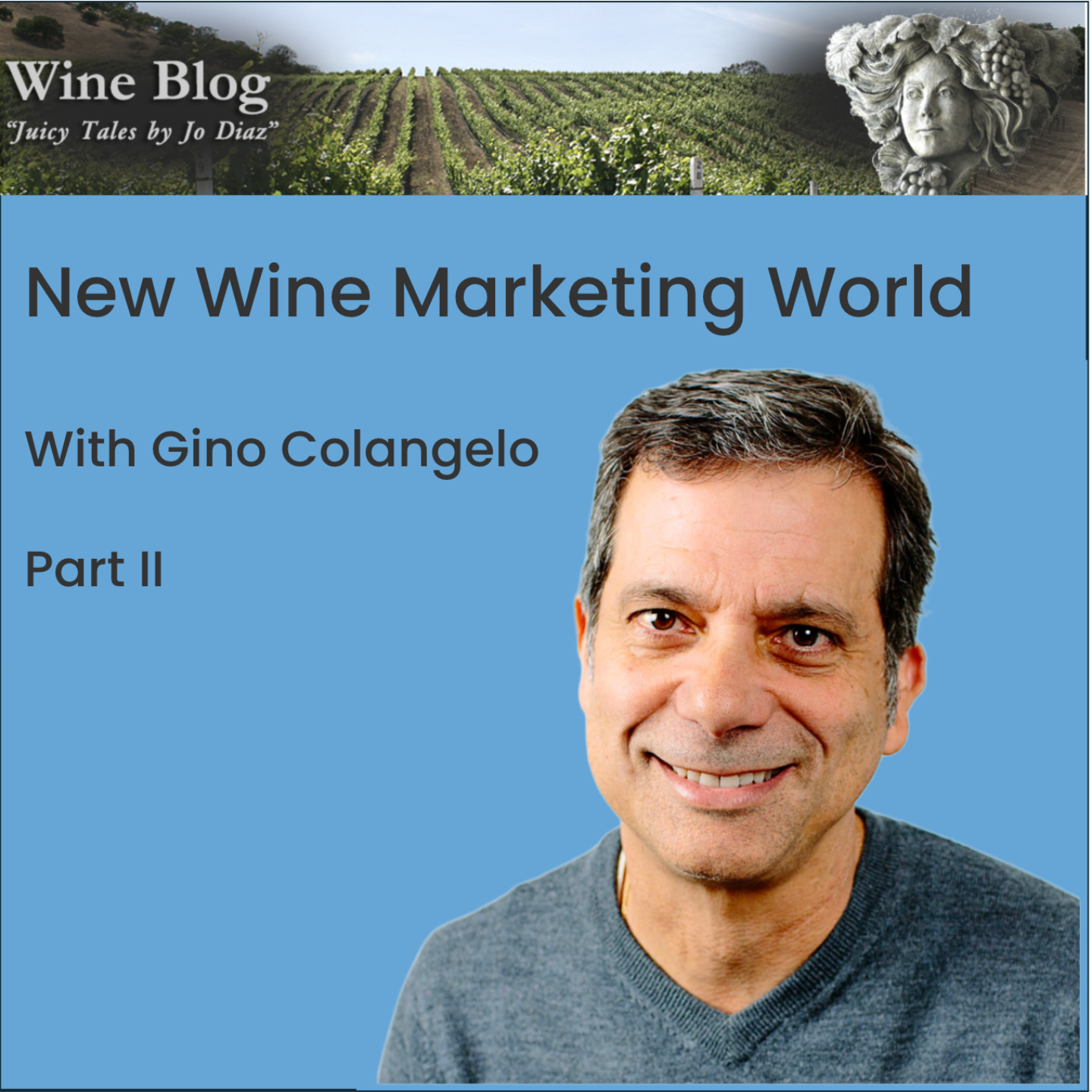
The C.O.O. of the U.S. agency shares insights on challenges, opportunities, and strategic communication in a rapidly evolving industry.
At a time when the global wine sector is under pressure from declining consumption, shifting consumer demographics, and fierce competition from alternative beverages, the U.S. remains both a demanding and indispensable market. Exchange rates favor European exporters, yet producers must contend with disruptive forces ranging from RTDs and non-alcoholic offerings to changing on-premise dynamics. Against this backdrop, we spoke with Felipe Gonzalez-Gordon, Chief Operating Officer at Colangelo & Partners, US-based integrated communications and public relations agency, to discuss how wineries can navigate these headwinds, connect with new audiences, and seize opportunities in premiumization and beyond.
Looking at today’s U.S. wine market, what do you see as the most urgent challenges but also the most exciting opportunities for producers who want to grow in this market, especially in a context of declining consumption, a shifting target audience, and increasing commercial pressures?
It’s a challenging time for the wine industry with tariffs, declining consumption due to health concerns with Non-Alcoholic category up ~31% Year over Year according to Nielsen data; GLP-1 (Glucagon-Like Peptide-1) drugs for weight loss with observational evidence indicating that they may reduce alcohol intake per JAMA (Journal of the American Medical Association); Ready to Drinks for which IWSR (International Wine & Spirits Research) data shows +14% CAGR between 2019–24 while still wine is −4%; and cannabis.
At the same time, the exchange rate is favorable for EU exporters and the US wine production cannot supply all the demand. American consumers still value EU wine regions and wine styles which are not easily replaceable.
Of course it is easier to do business with the wind on one’s back but there are opportunities for wineries to solidify their position in the market and even enter the market if they are willing to adapt their marketing mix.
In markets like the United States, the on-premise channel has undergone major changes in recent years, and retail dynamics have also evolved. Which market segments do you see as offering the greatest growth potential for producers today?
If you are to consider growth potential on the basis of where most of the volume is sold, I’d say retail — Off-trade represented ~76.6% of category revenue in 2024 (US). But it is not easy to generalize. Channel selection depends on multiple factors including but not limited to price, country of origin or category, level of trade support. The retail channel is the largest in terms of volume and value but it is also crowded and competitive. It requires a compelling brand story that differentiates from its competitors and consistent marketing support. Even in retail you have subcategorizations: independent wine shops, grocery stores, multi unit specialist retailers. Each requires a different approach.
On-premise wine sales totaled ~$13.8B in 2024 (−5.3% YoY) according to CGA by Nielsen. It has the advantage — in some cases — of having a sommelier that can present wines to consumers, and it offers the consumers to try new wines by the glass.
The online channel is growing in importance with Global alcohol e-commerce projected >$36B by 2028 (+~20% value 2023–28) according to IWSR, but it still remains relatively small in comparison. Thus the opportunity might be different for one brand to the next, but it is important to have a strategy, understand how your brand fits and then implement a clear route to market with input from your import and distribution partners.
In recent years, we have seen a drop in wine consumption across many demographic groups, especially younger generations. How is Colangelo & Partners helping brands to reach (or re-engage) these audiences without sacrificing identity and quality?
NIQ shows wine under pressure in 2024 while Non-Alcohol grew ~31% YoY and RTDs outperformed over 2019–24, underscoring messaging and format challenges with younger cohorts. Research shows that GenZ is influencing trends in consumption and premiumization. As a leading communications agency in the beverage alcohol space, we at Colangelo & Partners tailor programs to address the specific challenges of each client. Our goal is to reach the right audiences, with the right message whether it is through social media campaigns, influencer marketing, experiential events or more traditional media relations. That implies defining our clients’ consumer personas to understand how they gather information and what influences their decisions. We help our clients craft compelling messages that will resonate with and inspire younger consumers. In some cases it’s about demystifying wine, making it more accessible and approachable, in others it is about scarcity and exclusivity. The critical part is crafting messages that reflect the brand’s ethos and delivering them to the audiences that care.
With the aging of the traditional wine-drinking base and the growing competition from alternative beverages (craft beers, spirits, …), what kind of communication strategy do you think can keep the wine lifestyle relevant and appealing—particularly in a market like the U.S.?
I think it is important to underscore that wine in moderation can enhance one’s life experiences, whether it’s bringing out the flavors of a meal, helping someone reminisce about a recent trip to a wine producing country or region, bringing back enjoyable memories of times shared with friends, or creating new ones. Wine has accompanied many cultures for thousands of years. It’s important to communicate that wine is an agricultural product, closer to food than other beverages. Through wine one can explore other cultures, geography, history, climate, gastronomy and more.
Let’s talk about premiumization: more and more producers are trying to move into premium segments to offset volume declines. What are the most common mistakes you see when a brand attempts this shift, especially in terms of communication, pricing, and distribution channel?
I’m glad you asked this question. Let’s dive a bit deeper into what premiumization is and what it implies because it’s not about just selling at higher price points. Brands in mature, competitive markets can achieve growth by attracting new consumers with a higher willingness to pay more and escape downward spiral of price reductions and margin erosion. It allows firms to achieve higher price levels by adding value to a brand in an attempt of motivating consumers to pay more for products and services. It is a difficult process that requires a strategic and systematic approach. When considering premiumization, benefits have to be balanced against high costs and risks, including realignment of corporate culture, acquiring new competencies, and managing negative feedback that may affect the rest of the portfolio. Since premiumization is about adding value to a brand or a portfolio along with achieving a higher price level, price/value (re)positioning is at the heart of any premiumization strategy. The (re)positioning of a brand should never be based solely on price but should rather reflect the underlying value as perceived by the consumer. Perceived value can be derived from different components that are capable of fulfilling consumer needs: functional value, emotional value, symbolic value, and ethical value. Each of these components adds value to a brand and differentiate it from competing brands. One must keep in mind that consumers will buy a product only if the perceived value derived from all components corresponds to, or exceeds, the price. It’s not about improving the product’s functional value or basic performance; it’s about creating and communicating the emotional, symbolic and ethical values. [NIQ: Even as wine fell overall in 2024, $15–$25 tiers showed relative resilience; SVB: average winery revenue −3.4% in 2024 while top quartile grew ~22%, underscoring selective premium success.
Beyond the U.S., which geographic markets do you currently see as the most challenging, and which hold the greatest opportunities for Italian wines?
Coastal markets particularly the east coast have affinity towards imported wines in general, they are more densely populated, and more sophisticated, but they are highly saturated. For this reason I think secondary and even tertiary markets present an opportunity. There is less competition there and are not as frequently visited by exporters as the primary markets.
Colangelo & Partners has the privilege of working across multiple parts of the value chain—communication, trade relations, and more—giving you a systemic view of the industry. Do you agree that the different players in the wine ecosystem—from producers to institutions, from distributors to communicators—need to work more closely together to give the sector new momentum? And what role does Colangelo & Partners want to play in this process?
I agree with that assessment. It’s parochial to consider your winery neighbor as your competitor, the competition and the challenge is much bigger. The introduction of other beverage alcohol products like RTDs, non-alcohol alternatives, cannabis and the negative and often misleading publicity regarding wines are problems that affect the wine industry at large and would be better tackled as a united front. Colangelo & Partners helps wineries tell their stories and connect with their audience. We are also actively involved in the Come Over October platform, created by wine journalist Karen MacNeil—and public relations and communications veterans Gino Colangelo and Kimberly Noelle Charles– that operates under the trio’s mission-driven company, Come Together— A Community for Wine Inc. The initiative encourages sharing wine, celebrating friendship and in-person connections.
Colangelo & Partners is known for its multicultural, multilingual team, capable of engaging with complex markets and diverse stakeholders. How do you identify and nurture your talent? And what skills do you consider essential today for those working in global wine communications and trade?
A passion for wine is essential. One does not need to be an enologist or a master of wine, but loving the category allows people working in the communications field or the wine trade to perform at a much higher level, transmitting and pouring their enthusiasm in everything they do. It keeps the motivation high for learning wine appreciation, history, geography, the techniques, the stories and people that shape them. We seek to build a diverse, multicultural team because that reflects the broader audiences we are trying to reach. We cultivate multilingual talent because we work with wineries from different countries and it makes it easier for our clients to communicate in their own language and with a team that shares a cultural background. We provide plenty of training and tasting opportunities for our teams to expand their knowledge and interest. We also encourage our teams to stay abreast of the latest in digital marketing, consumer preferences, industry trends and the who is who in the media and trade spaces.
The wine sector is often criticized for being too driven by instinct and tradition, and not enough by data. From your perspective, are we truly making full use of market research and digital metrics? Or is there still cultural resistance to making data-driven decisions—on pricing, channels, communication—and if so, how do we overcome it?
I don’t think there is cultural resistance. The challenge arises from the fact that data is incredibly fragmented, incomplete, inconsistent, and expensive to obtain. But even with the best market research, it’s difficult to change one’s business model or portfolio to chase the latest trend. The wine business is a long term business, and it is best to stay the course while navigating the challenges. Data and market research allow us better understand the nature and implications of those challenges and thus how to adapt, so yes it is important to be data driven, but the adaptations one may be able to implement might be small or inadequate. The data will allow us to be more precise and effective with that which we are able to influence. Some of sources we regularly use in our strategic planning for our clients are NIQ (off-premise performance), CGA by NIQ (on-premise), IWSR (multi-year forecasts), SVB (winery revenue/P&L); Gomberg, Frederickson & Associates; Shanken’s Impact databank; EPG Media’s Wine Handbook.
Key points:
Collaboration matters: producers, distributors, and communicators must work together to keep wine relevant against growing competition.
Market challenges are mounting: declining wine consumption, health-driven shifts, and rising competition from ready-to-drink beverages, non-alcoholic options, and cannabis;
Opportunities remain strong: favorable exchange rates and enduring U.S. demand for European wines create room for growth;
Premiumization is key: success depends not just on higher prices but on delivering real value—functional, emotional, symbolic, and ethical;